

The Algorithmic Self: How Identity Became a Product
We once saw technology as a tool, something separate from us. Today, we live inside it.

Now what exactly is this ‘we,’ and what exactly is this ‘it’? For centuries, we’ve accepted that perception is subjective, that your 'blue' might not be my 'blue.' But this was a philosophical curiosity. Today, it is an engineered reality. Consider the Instagram feed: two people can look at the world through their screens and see entirely different universes. One sees progress and opportunity; the other sees crisis and decay. Both are algorithmically generated, and both feel entirely real. We no longer just navigate a reality with debatable terms; we now inhabit personalized realities, scripted by code.

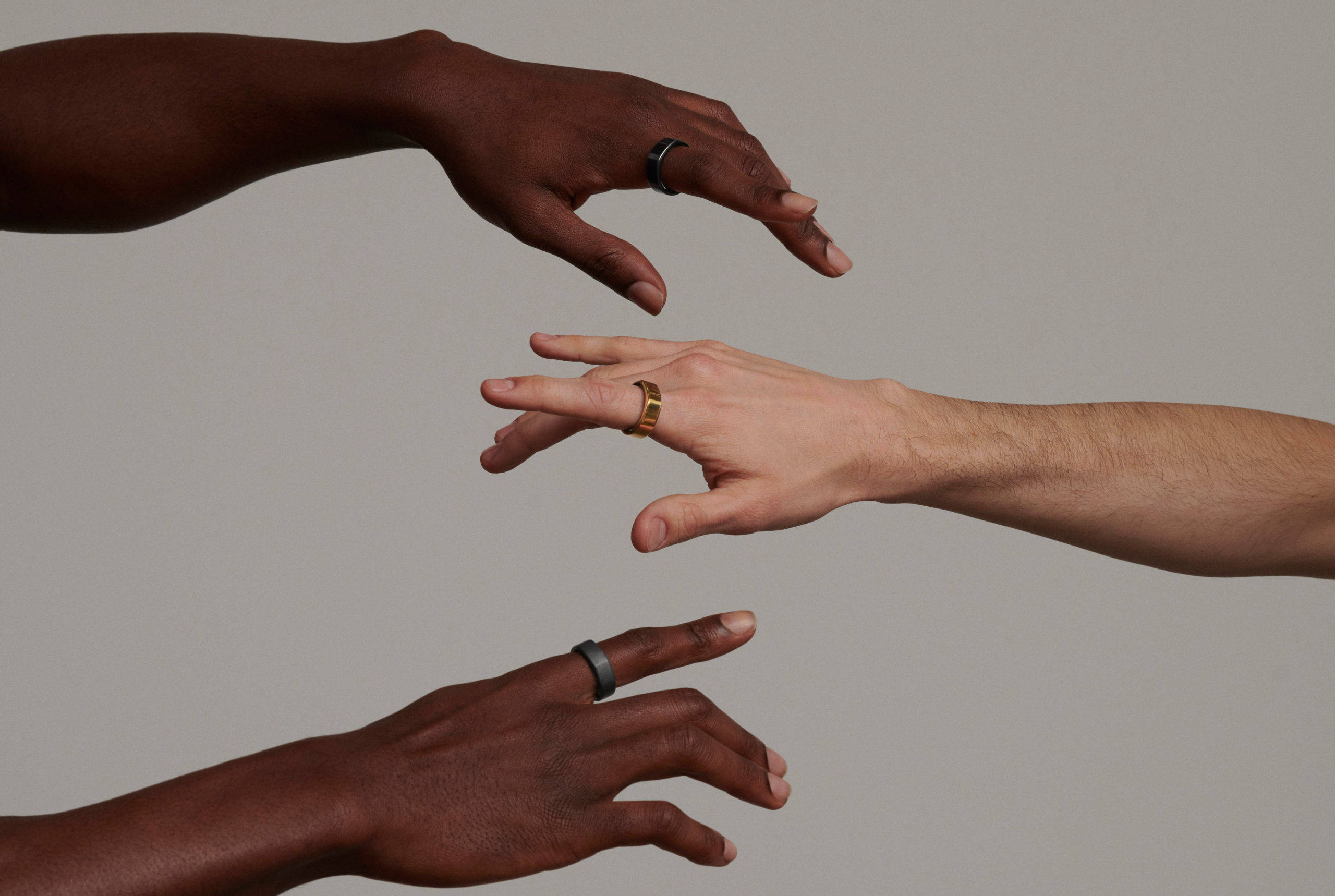
The most radical piece of technology shaping our identity isn’t a VR headset or a complex AI. It’s the simple smart ring—take the Oura Ring for example. This discreet band made of polished titanium can be seen on a founder’s hand or an investor’s finger. The ring is more than just a futuristic piece of jewelry. It's an entry point for the Algorithmic Self: a new version of human identity quietly being co-authored by the data we generate.
Let’s deconstruct it, shall we?
For starters, let's take a look at the marketing, which is focused on "peak performance"; it's a masterclass in misdirection. The true essence of the product isn’t the performance; it’s the belief system. To wear the ring is to accept an ideology: that your body is a system to be optimized and that a life can be more efficiently lived if it’s first converted into a series of data points.
It’s a quiet bet that a life measured is a life improved, and this is the same mechanism through which the Algorithmic Self is built, one data point at a time.
The Object as Ideology
Now, let’s look at the object itself, and not just as tech, but as jewelry. The design is one of aggressive minimalism. It’s a featureless band of titanium, designed not to compete with a wedding ring or a luxury watch, but rather to coexist or disappear with it. That's the thing; its flawless perfection is what gives it away. It lacks the warmth of worn gold or the sharp facets of a gemstone. Its beauty lies in the precise machinery of the tool, humming with endless capability on your finger.
The Invisible Architecture
The same principle extends far beyond the design of the ring. The feedback loop between your body and the ring’s app is functionally identical to the loop between your clicks and the social media feed that sculpts your reality. The algorithm that governs your sleep operates on the same principle as the one that curates the art you admire, the opinions you encounter, and the desires you form. Our preferences, once considered subjective, have just become training data. We’re not just using these systems; we’re letting them define the terms of our lives, chiseling away at our identity with every click.
For The Architects, the people actually building tomorrow, this is not just a theory or some abstract concept. It is a new set of variables to master:
Identity-as-a-Service (IaaS)
We used to market to people. Now, we build the tools they use to market themselves. The ring sells the "Quantified Self." Instagram sells the "Curated Self." The strategic question is, what component of identity do you provide?
Design for Legibility, Not Frictionlessness
Forget 'frictionless' design if it hides the truth. That silky-smooth experience often just masks how algorithms are subtly shaping your reality, making your choices for you. The new premium is 'legibility' building systems so transparent you can see the algorithmic machinery at work. It's about giving users real agency and clear 'off-ramps’ and building trust through honesty, not by burying the blueprint.
Build a Counter-Narrative
In a world drowning in data, the secret sauce isn’t a better product. It’s a better point of view. The strongest brands will offer a compelling counter-narrative to pure optimization. They will stand for a version of the “good life” that can't be measured in a dashboard. Look at the film studio A24. In an industry obsessed with algorithmic predictions and billion-dollar superhero franchises, A24 built an empire by betting on human taste: the singular vision of an auteur director. Their brand is the killer feature. They don't sell movies; they sell a curatorial standard, a promise that what you're about to see matters. They architected a version of the 'good life' that can't be measured in a dashboard: one of artistic audacity and intellectual curiosity.
This silent rewiring is profound. Our identities are shifting from something we navigate intuitively to something that is constantly informed and rewritten by algorithms. For those of us building tomorrow's world, passive observation is not an option. We must decode the blueprint, understand this new human variable, and consciously architect what comes next. We also must recognize that the “Algorithmic Self” will wear different masks and hold different values in Silicon Valley, Shanghai, or Saudi Arabia.
The most vital act isn’t just about cultivating what can't be measured: our judgment, our courage, and our unpredictable spark of creativity. It’s about weaponizing them, building companies and products where human taste is the killer feature an algorithm can never replicate.
That is the new frontier, and it is the only one worth building.